Everything the rules of Tower Rush actually cover: the build/cash-out loop, what each bonus floor does, and how risk changes as the tower climbs.
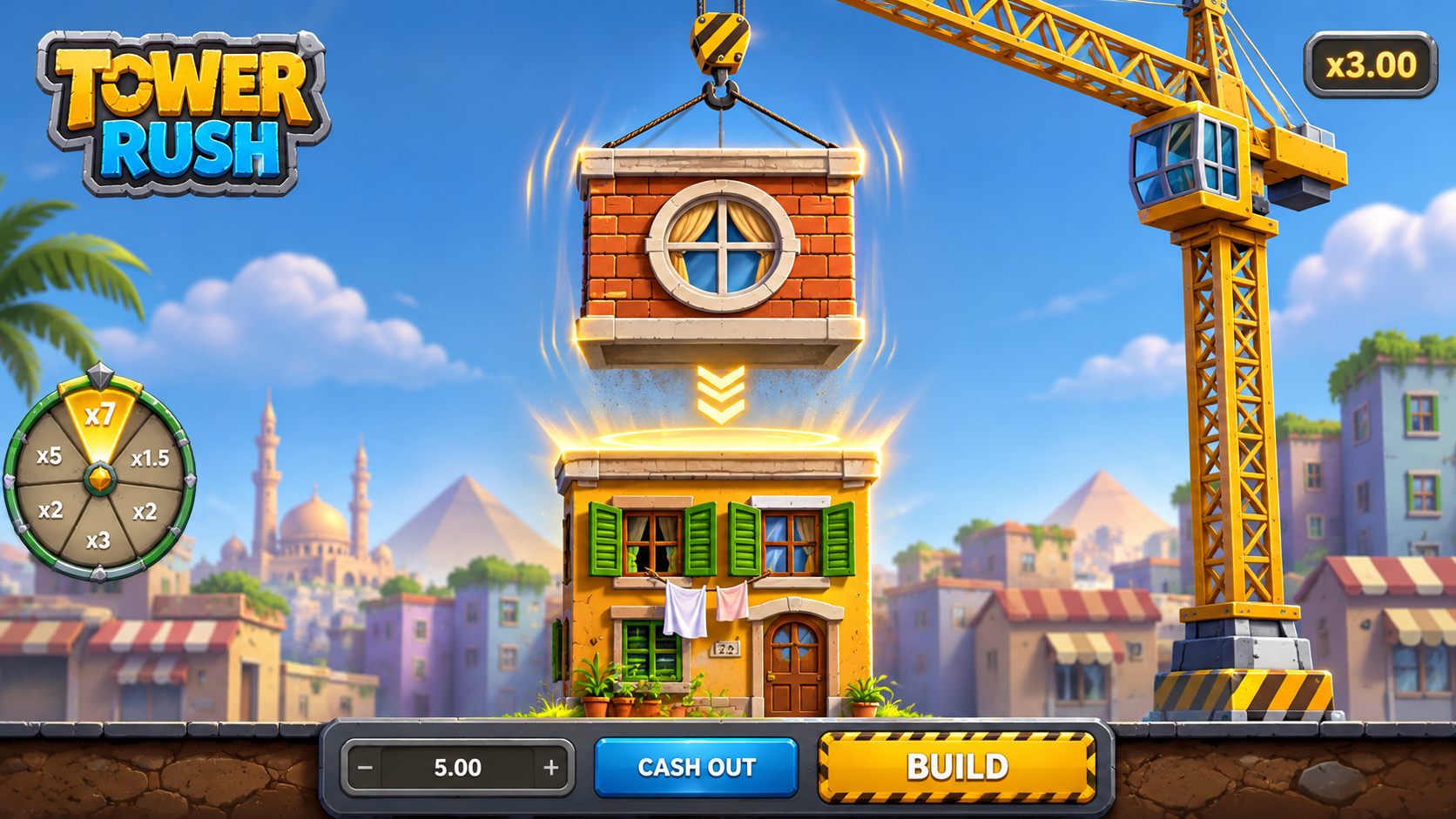
Forget the usual crash-game curve for a second - Tower Rush turns the same underlying idea into something you watch happen floor by floor. A crane drops each new level onto your stack; land it and your bet multiplies; miss it and the whole thing comes down. This page walks through the complete rule set, what the three bonus floors actually do, and how risk builds as you climb higher.
1
Decision per floor
3
Random bonus floor types
95.1-97.6%
RTP range
40,000x
Max win
The Full Loop, Start to Finish
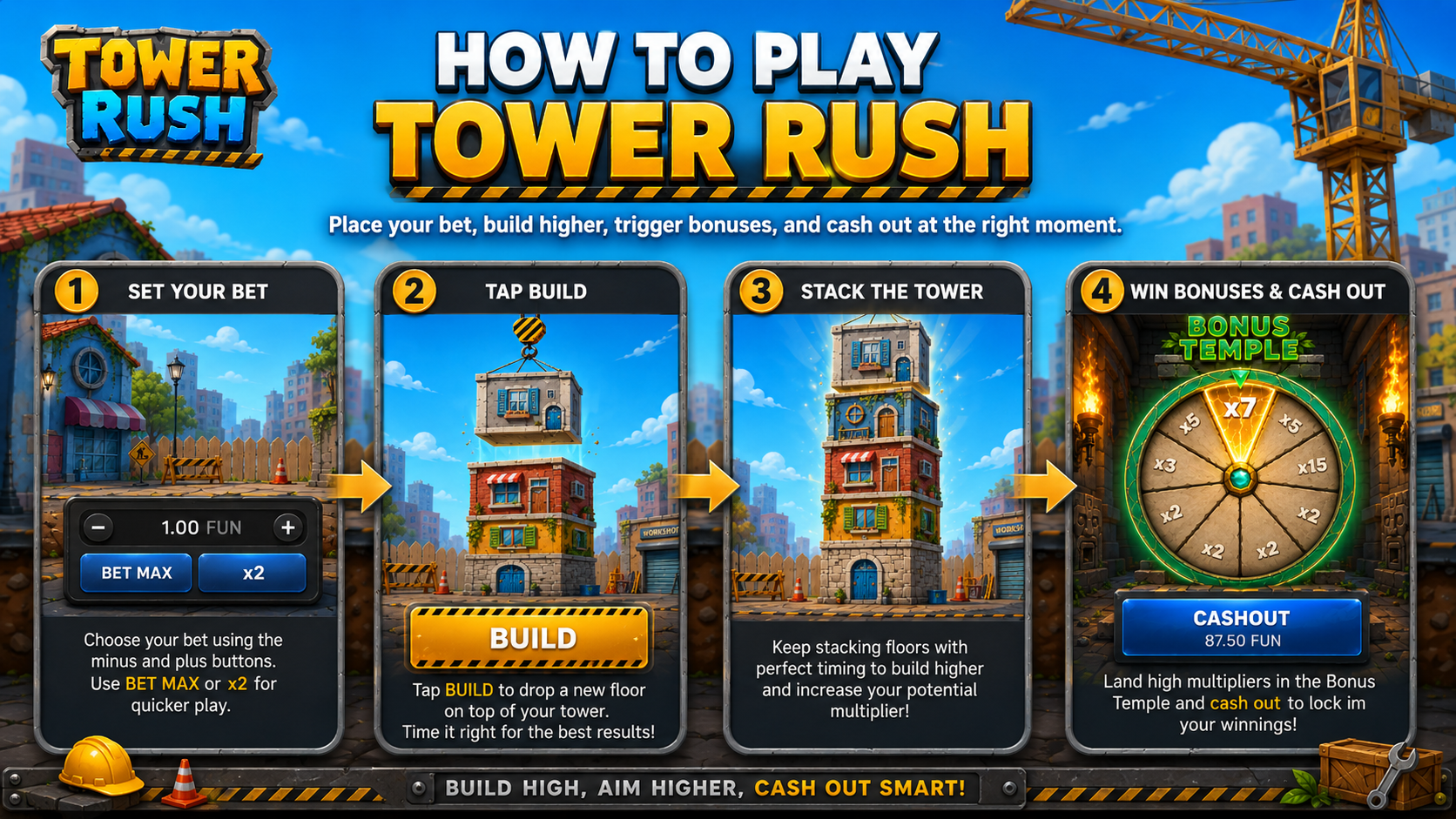
Set a bet, press Build, then choose after every floor: Cash Out or keep going.
Set your stake before the round begins - this can't be changed mid-climb.
Press Build. The crane lowers the first floor; a clean landing multiplies your bet.
After each successful floor, choose Cash Out to bank the current multiplier, or Build again to go higher.
Watch for Frozen Floor, Temple Floor and Triple Build - each changes the round the moment it appears.
A missed floor ends everything instantly: the tower falls, and anything not already cashed out or frozen is gone.
The Three Bonus Floors
Frozen Floor
Pure insurance
Locks in your current winnings even if a later floor brings the tower down.
Temple Floor
A wheel spin
Multiplies your current win by somewhere between x1.5 and x7.
Triple Build
Three floors at once
Stacks three floors in a single move, each worth at least x1 on its own.
Each bonus floor pulls the round in a different direction. Frozen Floor is purely defensive - it protects what you've already banked, no matter what comes next. Temple Floor can leapfrog you past several "normal" floors in one spin. Triple Build trades speed for the same underlying risk as any other floor - it just compresses three decisions into one.
Same rules, zero risk, in the demo
Practise the full build/cash-out loop before a single real bet is involved.
Why the Risk Doesn't Scale Evenly
Climb stage
What typically happens
Risk level
First couple of floors
Small, fairly reliable gains
Low
Mid-tower
Multiplier growth noticeably speeds up
Medium
Higher floors
Large multipliers, one miss away from zero
High
Bonus floor trigger
Frozen Floor, Temple Floor, or Triple Build appears
Varies
Illustrative multiplier growth by floor
Floors 1-2Early, low-risk climb
~1.2x-1.5x
Floors 3-4Steady acceleration
~1.8x-2.5x
Floors 5-6Growth speeds up noticeably
~3.5x-6x
Floors 7-8High risk, high reward
~8x-15x
Floor 9+Rare, usually bonus-assisted
20x-40,000x
An illustrative curve, not an exact per-round pay table - Galaxsys doesn't publish floor-by-floor odds.
Frequently Asked Questions
What exactly ends a round?
A missed floor, full stop. The tower collapses, the stake is lost, and nothing partial survives unless a Frozen Floor had already locked in a payout earlier in that same climb.
Is there a way to automate the cash-out decision?
Many operators offer an auto cash-out setting - pick a target multiplier in advance and the game banks it automatically the instant the tower reaches that point, no manual click required.
Do the bonus floors follow any pattern I can predict?
No - Frozen Floor, Temple Floor and Triple Build are random triggers layered on top of the normal climb. None of them is owed to you in any particular round.
Is there pressure to decide quickly after each floor lands?
Not from the game itself - most versions let you take your time on each Cash Out vs Build decision. Whatever discipline you apply is self-imposed, not enforced by a countdown.
What should a first-time player actually do before betting real money?
Run a handful of demo rounds first. It costs nothing, uses identical maths, and is the fastest way to internalise how quickly multipliers grow and what each bonus floor feels like when it triggers.
Play within your limits. Every floor's result is independent and random - no cash-out pattern changes the underlying house edge. Set a deposit and time limit before you start, and treat losses as final. 18+.